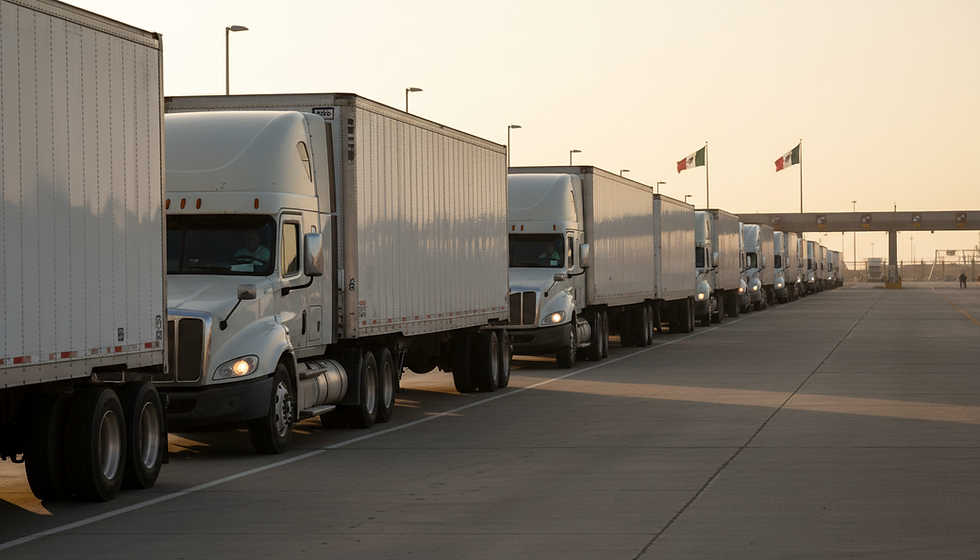
USMCA Review - Outcomes and Future Talks Insights for North American Trade

On July 1st, the six-year review of the United States-Mexico-Canada Agreement (USMCA) took place through a virtual meeting. This review is a required step to assess the agreement’s performance and consider its future. The meeting revealed key positions from the three countries involved, especially the United States, which declined to extend the agreement for another 16 years in its current form. Instead, the USMCA will remain in force until 2036, with annual reviews to monitor progress and address concerns. Mexico and Canada supported a 16-year extension, but the US is pushing for changes in specific areas such as automotive rules of origin, reducing trade deficits, and limiting China’s role in North American supply chains. Talks are ongoing, with the next round between the US and Mexico scheduled for the week of July 20th in Mexico City.
This post explores the outcomes of the recent USMCA review, the key issues at stake, and what the future holds for North American trade under this agreement.

What Happened at the Six-Year Review
The USMCA, which replaced NAFTA in 2020, includes a clause requiring a review every six years to evaluate its effectiveness and decide on its continuation. The July 1st meeting was the first such review. It was held virtually, reflecting ongoing adaptations to international diplomacy.
The key outcome was that the United States declined to extend the agreement for another 16 years without changes. Instead, the agreement will continue until 2036, but with annual reviews to keep the terms under close watch. This approach allows the US to push for adjustments while maintaining the overall framework.
Mexico and Canada, on the other hand, favored a straightforward 16-year extension, signaling their preference for stability and predictability in trade relations.
Why the United States Wants Changes
The US government’s stance reflects concerns about specific aspects of the agreement and broader trade policy goals. The main areas where the US seeks changes include:
Automotive rules of origin
The US wants stricter requirements for how much of a vehicle’s parts must come from North America to qualify for tariff-free treatment. This aims to boost domestic manufacturing and jobs.
Reducing trade deficits
The US is concerned about persistent trade imbalances, especially with Mexico. It wants measures that encourage more balanced trade flows.
Keeping China out of North American supply chains
The US aims to limit China’s influence in critical supply chains, particularly in sectors like automotive and technology, to enhance security and economic independence.
These demands reflect a broader US trade policy trend focused on protecting domestic industries and addressing geopolitical risks.
What This Means for Mexico and Canada
Mexico and Canada’s support for a 16-year extension shows their interest in maintaining a stable trade environment. Both countries benefit from the USMCA’s provisions that facilitate cross-border trade and investment.
However, they will need to engage in negotiations to address the US’s concerns. The upcoming talks, starting with the US-Mexico round in Mexico City in late July, will be critical. Canada is expected to participate in parallel discussions to ensure its interests are represented.
Both countries will likely push back on overly strict automotive rules or measures that could disrupt existing supply chains. They also want to preserve the agreement’s benefits for their exporters and manufacturers.
The Importance of Annual Reviews
Switching from a 16-year extension to annual reviews marks a significant change in how the USMCA will be managed. Annual reviews provide:
More frequent opportunities to address issues
Problems can be identified and resolved faster, preventing long-term disruptions.
Greater flexibility
The agreement can adapt to changing economic conditions and geopolitical realities.
Increased pressure for compliance
Countries must stay aligned with the agreement’s goals or face potential consequences.
This approach reflects a more dynamic and responsive trade governance model, but it also means ongoing negotiations and potential uncertainty for businesses.
What to Expect in the Upcoming Talks
The next round of talks between the US and Mexico, scheduled for the week of July 20th in Mexico City, will focus on the US’s proposed changes. Key topics likely to be discussed include:
Revising automotive rules of origin to increase North American content requirements
Strategies to reduce trade deficits, possibly through new trade facilitation measures or incentives
Policies to limit China’s role in supply chains, including stricter sourcing rules or monitoring mechanisms
Canada will closely watch these talks and engage in its own discussions to protect its interests.
Businesses involved in North American trade should monitor these developments closely, as changes could affect supply chains, tariffs, and regulatory compliance.
Practical Implications for North American Businesses
The USMCA has been a cornerstone for trade in North America, supporting industries from automotive to agriculture. The recent review and ongoing talks mean businesses should:
Review supply chains
Assess how changes in rules of origin might affect sourcing and manufacturing locations.
Prepare for regulatory updates
Stay informed about potential new compliance requirements related to trade deficits and supply chain security.
Engage with trade associations
Industry groups often provide updates and advocate on behalf of businesses during negotiations.
Plan for uncertainty
Annual reviews mean the trade environment could shift more frequently, so flexibility is key.
For example, an automotive manufacturer might need to increase the percentage of parts sourced from North America to meet stricter rules. An agricultural exporter should watch for any changes in tariffs or certification processes.
The Broader Context of North American Trade
The USMCA is more than a trade deal; it reflects the economic and political relationships between the US, Mexico, and Canada. The current review highlights:
The US’s focus on protecting domestic industries and addressing geopolitical risks
Mexico and Canada’s desire for stable, predictable trade conditions
The challenges of balancing national interests with regional cooperation
These dynamics will shape North American trade policy for years to come.
The USMCA remains in force and continues to support trade across North America. The recent review did not change the agreement itself but set the stage for ongoing negotiations and adjustments. Businesses and policymakers should stay engaged with these developments to navigate the evolving trade landscape effectively. The next talks in Mexico City will be a key moment to watch as the three countries work to balance their interests and keep North American trade strong.
contact: info@boutiquebridgemx.com